Scientists have succeeded in harnessing a greater amount of energy than in the past from bacteria normally found far overhead in the Earth’s atmosphere, Bacillus stratosphericus, by incorporating it into a novel new biofilm used in Microbial Fuel Cells (MFC). The team’s findings were published in the American Chemical Society’s Journal of Environmental Science and Technology Feb 21.
MFCs function similar to a small battery, except that they rely on a process called bio-catalytic oxidation which involves using bacteria for the conversion of organic compounds into electrical energy.
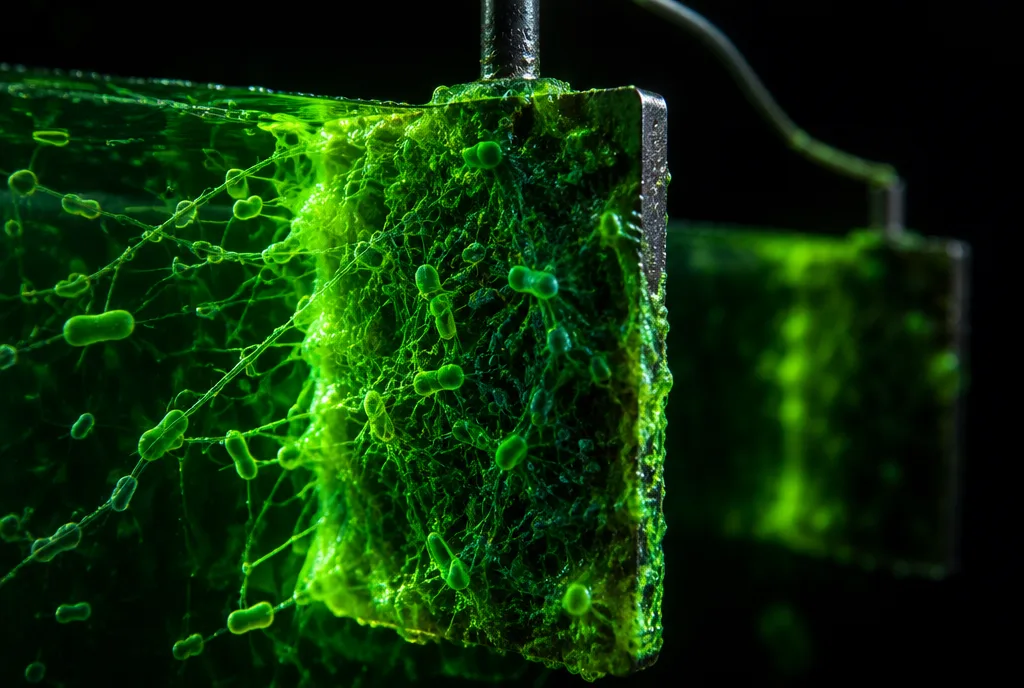
The bacteria is combined with the organic material as part of a biofilm “slime” coating that covers the MFC electrodes, and as the microbes feed, an electron current is produced which passes into the electrodes resulting in power generation.
In the case of B. Stratosphericus, although typically found in large concentrations out of reach at about an altitude of 30 kilometers, the researchers from Newcastle University were able to isolate specimens of the bacteria from a river bed after atmospheric cycling carried them down to the Earth’s surface, along with other species including a microbe referred to as Bacillus altitudinis, which also originated in Earth’s upper atmosphere.
In the past, other forms of microbial biofilms have been developed and utilized in MFCs, such as those employed in sewer plants and waste water treatment applications, but the newly-acquired bacteria was the key ingredient in exceeding prior capabilities, a highly-efficient electricity producer that, when combined with the other compatible microbial species in the newly engineered super biofilm, enabled the power output of the MFC to be effectively doubled, reaching 200 watts per cubic meter.
Thus, the new fuel cell is capable of energizing an electric light, which may seem like a small accomplishment but, as Grant Burgess noted, Professor of Marine Biology at the University, the research clearly demonstrated the “potential power of the technique,” and the technology could play a significant role in the future in developing countries lacking sources of electrical energy.
Burgess added that “this is the first time individual microbes have been studied and selected in this way. Finding B. stratosphericus was quite a surprise,” and “there are billions of microbes out there with the potential to generate power” using this technology. It is also the first time biofilms were manipulated rather than allowed to grow unchecked, which resulted in better control and a substantial boost in the fuel cell’s electrical output.